
How Professional Janitorial Services Help Evansville Businesses Stay Clean and Productive
TIP: Ask any commercial cleaning provider for a copy of their safety data sheets and dilution protocols before they begin work in your facility. A provider who cannot produce these documents on request is not operating at a professional standard. In industrial environments, pressure washing and degreasing operations must account for drainage infrastructure before work begins. Releasing heavy concentrations of petroleum-based soil into storm drains without pre-treatment violates EPA regulations under the Clean Water Act. A qualified commercial cleaning company performs containment and uses vacuums or recovery systems to capture wash water before it enters floor drains in areas that connect to municipal stormwater systems.
Quick Answer: Professional janitorial services help Evansville businesses stay productive by removing the small daily frictions that pull people away from their work: restrooms that need attention, trash that overflows, floors that track in salt and moisture, and shared surfaces that pass germs from one employee to the next. A trained crew works from a written checklist, follows a set schedule, and is supervised, so the building starts every morning in the same condition. The result is a workplace where staff can focus on the job, visitors form a good first impression, and managers spend their time on the business instead of on cleaning complaints.
It is Monday morning in Evansville, and an operations manager is walking from the parking lot to her desk before the first meeting. The entry mat is dry and flat. The lobby glass is clear. The trash cans are empty, the break room counter is wiped, and the restroom is stocked. She does not notice any of it, and that is exactly the point. When janitorial work is done well, nothing about the building asks for attention, and every person who walks in can think about something else.
Compare that to the other version of Monday. A paper towel dispenser is empty, so a staff member goes hunting for supplies. A spill near the copier has dried into a sticky patch. Someone sends an email about the break room refrigerator. A client waiting in the lobby notices the dust on the reception counter. None of these problems is large, but each one pulls a person away from what they were hired to do.
This article looks at janitorial service from a different angle than a simple list of tasks. It explains how a professional program works behind the scenes, why that structure matters to the way a workplace feels and functions, and what Evansville managers can look for when they want a building that stays ready for work.
TIP: Ask any commercial cleaning provider for a copy of their safety data sheets and dilution protocols before they begin work in your facility. A provider who cannot produce these documents on request is not operating at a professional standard. In industrial environments, pressure washing and degreasing operations must account for drainage infrastructure before work begins. Releasing heavy concentrations of petroleum-based soil into storm drains without pre-treatment violates EPA regulations under the Clean Water Act. A qualified commercial cleaning company performs containment and uses vacuums or recovery systems to capture wash water before it enters floor drains in areas that connect to municipal stormwater systems.
What Productivity Has to Do With Janitorial Work
Productivity is usually discussed in terms of software, meetings, and staffing. The physical workplace gets less attention, yet it shapes every hour of the day. A clean, orderly building removes obstacles. An untidy one adds them.
Think about the small interruptions a poorly maintained space creates. An employee stops to deal with an overflowing trash can. A team meets in a conference room that still has yesterday's cups on the table. A supervisor spends twenty minutes tracking down whoever is supposed to restock the restroom. These moments rarely appear in a report, but they add up across a week and across a team.
Professional janitorial service addresses the problem at its source. Instead of leaving cleaning to whoever happens to notice a need, it assigns specific tasks to specific people at specific times. The building is reset each night or each day to a known standard, so the workday begins without a list of small repairs.
There is also the matter of how people feel. Most employees will not describe their workplace as clean or dirty in so many words, but they react to it. A tidy entry, bright restrooms, and fresh air send a quiet message that the company pays attention to details. A neglected space sends the opposite message, and it can affect how staff and visitors view the business as a whole.
TIP: Ask any commercial cleaning provider for a copy of their safety data sheets and dilution protocols before they begin work in your facility. A provider who cannot produce these documents on request is not operating at a professional standard. In industrial environments, pressure washing and degreasing operations must account for drainage infrastructure before work begins. Releasing heavy concentrations of petroleum-based soil into storm drains without pre-treatment violates EPA regulations under the Clean Water Act. A qualified commercial cleaning company performs containment and uses vacuums or recovery systems to capture wash water before it enters floor drains in areas that connect to municipal stormwater systems.
The Daily Routine Behind a Clean Building
A professional crew does not simply walk through a building and clean whatever looks dirty. It works from a plan, and the plan is what makes the results consistent from one night to the next.
A Written Checklist For Every Area
Each room or zone has a list of tasks, such as emptying waste, dusting reachable surfaces, vacuuming, mopping, and sanitizing fixtures. The checklist keeps the work from depending on anyone's memory or mood.
A Set Order Of Work
Crews usually move from top to bottom and from clean areas to dirty ones. Dust is removed from higher surfaces before floors are done, and restrooms are handled with separate tools so germs do not travel to the rest of the building.
Dedicated Tools And Products
Color coded cloths, mops, and chemicals help prevent cross contamination, so the cloth used in a restroom never touches a break room table. Products are matched to the surface, which protects finishes and furnishings.
Supervision And Follow Up
A supervisor checks the finished work and corrects what falls short. That inspection step is what keeps standards from slipping after the first few weeks.
Together these habits turn cleaning from a chore into a system. For a facility manager, the system matters more than any single task, because it is what lets you trust that the building will be ready tomorrow without checking it yourself.
TIP: Ask any commercial cleaning provider for a copy of their safety data sheets and dilution protocols before they begin work in your facility. A provider who cannot produce these documents on request is not operating at a professional standard. In industrial environments, pressure washing and degreasing operations must account for drainage infrastructure before work begins. Releasing heavy concentrations of petroleum-based soil into storm drains without pre-treatment violates EPA regulations under the Clean Water Act. A qualified commercial cleaning company performs containment and uses vacuums or recovery systems to capture wash water before it enters floor drains in areas that connect to municipal stormwater systems.
Restrooms and Break Rooms Shape Daily Morale
If a business could improve only two spaces, restrooms and break rooms would be the best choices. They are used by nearly everyone, and they are the first places people notice when standards drop.
Restrooms need regular attention to fixtures, floors, mirrors, dispensers, and supplies. A professional crew sanitizes touched surfaces, restocks before supplies run low, and handles odor at the source instead of covering it. Because restrooms are used throughout the day, many buildings add a midday check so that a busy morning does not leave the space in poor shape by afternoon.
Break rooms deserve the same care. Shared microwaves, refrigerator handles, coffee stations, and tables are touched by many hands. A crew that wipes these surfaces, empties the trash, and cleans the floor gives employees a place to reset during the day. People who eat lunch in a clean room tend to return to their desks in a better frame of mind than people who spend their break moving crumbs out of the way.
Tip: Walk your own restrooms and break room at three different times of day, such as early morning, midday, and late afternoon. The difference between those visits shows you whether your cleaning schedule matches how the space is really used, and it gives you specific details to share with your provider.
TIP: Ask any commercial cleaning provider for a copy of their safety data sheets and dilution protocols before they begin work in your facility. A provider who cannot produce these documents on request is not operating at a professional standard. In industrial environments, pressure washing and degreasing operations must account for drainage infrastructure before work begins. Releasing heavy concentrations of petroleum-based soil into storm drains without pre-treatment violates EPA regulations under the Clean Water Act. A qualified commercial cleaning company performs containment and uses vacuums or recovery systems to capture wash water before it enters floor drains in areas that connect to municipal stormwater systems.
High Touch Surfaces and the Health of Your Team
Productivity depends on people being present and feeling well. Cleaning does not prevent every illness, but it plays a real part in limiting the spread of germs in shared spaces.
The Centers for Disease Control and Prevention describes high touch surfaces as the ones most likely to spread germs, and its examples for community buildings include door handles, stair rails, elevator buttons, touchpads, counters, and desks. The agency advises cleaning these surfaces regularly, cleaning other surfaces when they are visibly dirty, and cleaning before disinfecting, since dirt can keep a disinfectant from working well. It also separates the terms: cleaning removes germs and dirt with soap or detergent, sanitizing reduces the germs that remain, and disinfecting kills the germs left after cleaning.
A professional janitorial program builds those principles into the routine. High touch points are named on the checklist, so they are not forgotten when the crew is busy. Cleaning comes first, and disinfecting is used where it makes sense, such as areas where someone has been ill. The crew also knows to follow product directions, including contact time, instead of wiping a disinfectant away the moment it is applied.
For a workplace, the benefit is practical. Shared phones, keyboards in hot desk areas, conference room tables, and door hardware all pass through many hands in a week. When those points are cleaned on a schedule, employees are less likely to share avoidable illness, and fewer workdays are disrupted by a bug that moves through a department.
TIP: Ask any commercial cleaning provider for a copy of their safety data sheets and dilution protocols before they begin work in your facility. A provider who cannot produce these documents on request is not operating at a professional standard. In industrial environments, pressure washing and degreasing operations must account for drainage infrastructure before work begins. Releasing heavy concentrations of petroleum-based soil into storm drains without pre-treatment violates EPA regulations under the Clean Water Act. A qualified commercial cleaning company performs containment and uses vacuums or recovery systems to capture wash water before it enters floor drains in areas that connect to municipal stormwater systems.
Floors, Entries, and the Evansville Climate
Evansville sits on a bend of the Ohio River, and the weather shows up inside local buildings. According to the climate summary for the city, winters are cold to cool with roughly a foot of snow in an average year, and summers are hot and humid. That mix puts two kinds of stress on a floor.
In winter, road salt, ice melt, and slush are carried in on shoes. Salt dries into white film on hard floors and settles into carpet fibers, where it dulls the pile and grinds against it with every step. Wet entries also create a slip hazard for employees and visitors. In summer, humidity and rain bring moisture and grit through the same doors.
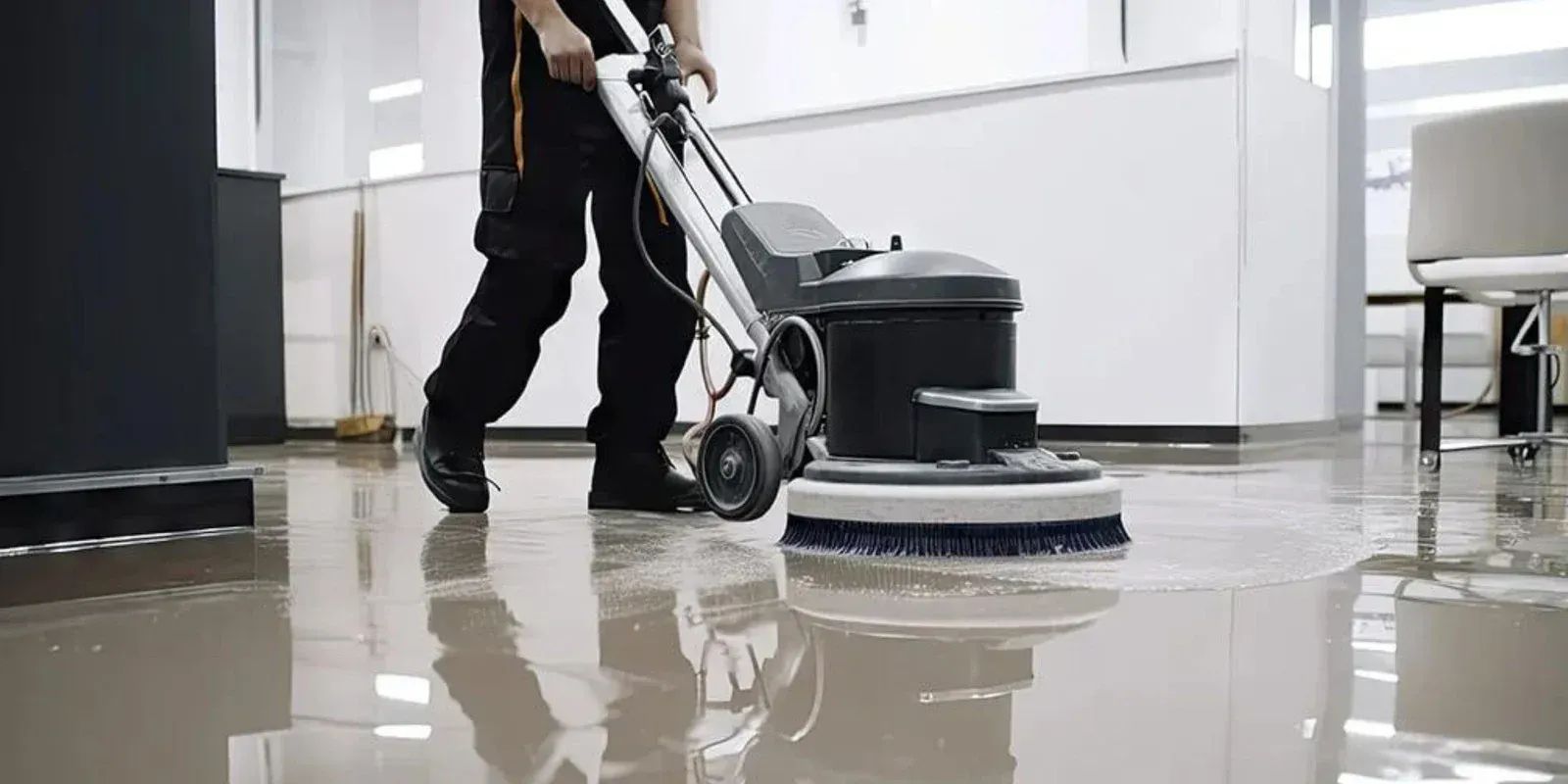
A professional crew treats entries as the first line of defense. Mats are cleaned or replaced as needed, entry floors are scrubbed and dried, and wet floor signage goes up while work is under way. Carpet in main corridors is vacuumed on a tighter cycle than back offices, and hard floors are maintained so that finish lasts longer and looks better.
Safety is part of the story as well. The Occupational Safety and Health Administration notes that falls on the same level are among the top causes of serious job injuries, and a dry, clear walking surface is one of the simplest ways to reduce that risk. A crew that finishes entries and corridors before the first shift arrives is doing more than making the building look good. It is helping people walk to their desks safely.
TIP: Ask any commercial cleaning provider for a copy of their safety data sheets and dilution protocols before they begin work in your facility. A provider who cannot produce these documents on request is not operating at a professional standard. In industrial environments, pressure washing and degreasing operations must account for drainage infrastructure before work begins. Releasing heavy concentrations of petroleum-based soil into storm drains without pre-treatment violates EPA regulations under the Clean Water Act. A qualified commercial cleaning company performs containment and uses vacuums or recovery systems to capture wash water before it enters floor drains in areas that connect to municipal stormwater systems.
Air, Dust, and Comfort
The air inside a building affects how people feel at work, and cleaning is one of several factors involved. The Environmental Protection Agency explains that when too little outdoor air enters a building, pollutants can build up to levels that cause health and comfort problems, and it notes that high temperature and humidity can increase concentrations of some pollutants. Ventilation is mostly a matter of how the building and its mechanical systems are designed and maintained.
What a janitorial crew can do is control the dust and debris that settle on surfaces and circulate through the space. Regular vacuuming with proper equipment, damp dusting of horizontal surfaces, cleaning of vent covers and grilles, and prompt drying of wet areas all help keep a building from collecting what employees would otherwise breathe in. In a humid river climate like Evansville's, quick attention to moisture also helps keep musty smells from taking hold in restrooms, storage rooms, and entry areas.
This is not a replacement for good ventilation, and a cleaning crew is not a substitute for a service call to an HVAC contractor when a system is not working. It is one dependable layer in a building that is meant to feel comfortable from morning to evening.
TIP: Ask any commercial cleaning provider for a copy of their safety data sheets and dilution protocols before they begin work in your facility. A provider who cannot produce these documents on request is not operating at a professional standard. In industrial environments, pressure washing and degreasing operations must account for drainage infrastructure before work begins. Releasing heavy concentrations of petroleum-based soil into storm drains without pre-treatment violates EPA regulations under the Clean Water Act. A qualified commercial cleaning company performs containment and uses vacuums or recovery systems to capture wash water before it enters floor drains in areas that connect to municipal stormwater systems.
Why Timing and Access Matter
A janitorial program is only as useful as its fit with the way your business operates. Evansville companies run on many different schedules. A downtown professional office may be empty by six in the evening. A distribution center may run several shifts. A clinic may have patients arriving early and late. A school or government office may have secure areas that require escorts or special access.
Good providers plan around those realities. After hours cleaning keeps noise and equipment away from staff and clients. Daytime attention to restrooms and lobbies keeps high traffic areas in shape while the doors are open. Facilities with overnight or weekend operations get schedules that match production, so cleaning never blocks a dock or interrupts a process.
Access is part of the plan too. Ask who holds keys or codes, how alarms are handled, and how the crew signs in and out. Those details protect your building, your equipment, and your people, and they are a good indicator of how organized a provider really is.
Warning:
A cleaning schedule that ignores your operating hours can create more disruption than it prevents. Floor scrubbing in a hallway at ten in the morning, or a vacuum running outside a conference room during a client call, undoes the very focus that clean buildings are meant to support. Agree on timing for each area before the first visit.
TIP: Ask any commercial cleaning provider for a copy of their safety data sheets and dilution protocols before they begin work in your facility. A provider who cannot produce these documents on request is not operating at a professional standard. In industrial environments, pressure washing and degreasing operations must account for drainage infrastructure before work begins. Releasing heavy concentrations of petroleum-based soil into storm drains without pre-treatment violates EPA regulations under the Clean Water Act. A qualified commercial cleaning company performs containment and uses vacuums or recovery systems to capture wash water before it enters floor drains in areas that connect to municipal stormwater systems.
What to Look For in a Janitorial Partner
Plenty of providers can say they offer janitorial service. The ones that help a business stay productive tend to share a few qualities.
A Scope Written By Area And Frequency
Specify cleaning tasks for each area and how often they must be completed.
Trained, Screened, And Supervised Staff
Ask about staff screening, training, supervision, and retention to ensure consistent service.
A Clear Path For Feedback
Confirm whom to contact about missed tasks and how quickly issues receive attention.
Experience With Your Type Of Space
Choose a provider experienced in cleaning buildings similar to your office, clinic, plant, or school.
Room To Adjust
Select a flexible provider who updates cleaning schedules and tasks as your needs change.
TIP: Ask any commercial cleaning provider for a copy of their safety data sheets and dilution protocols before they begin work in your facility. A provider who cannot produce these documents on request is not operating at a professional standard. In industrial environments, pressure washing and degreasing operations must account for drainage infrastructure before work begins. Releasing heavy concentrations of petroleum-based soil into storm drains without pre-treatment violates EPA regulations under the Clean Water Act. A qualified commercial cleaning company performs containment and uses vacuums or recovery systems to capture wash water before it enters floor drains in areas that connect to municipal stormwater systems.
Getting Started the Right Way
If you are reviewing your current cleaning program or hiring for the first time, a short process helps you start well.
Begin with a walkthrough of the building, pointing out sensitive areas, special surfaces, and the places that draw the most complaints. Ask the provider to propose a scope by area and frequency, then compare it to what you saw. Decide who on your team will receive reports and who will handle questions. In the first few weeks, walk the building the morning after a cleaning and note what looks right and what does not. Share that feedback early, while habits are still forming.
Managers who take this approach usually find that the program settles in quickly. Within a month or two, the building stops being a topic of conversation, and that is the best sign that it is doing its job.
TIP: Ask any commercial cleaning provider for a copy of their safety data sheets and dilution protocols before they begin work in your facility. A provider who cannot produce these documents on request is not operating at a professional standard. In industrial environments, pressure washing and degreasing operations must account for drainage infrastructure before work begins. Releasing heavy concentrations of petroleum-based soil into storm drains without pre-treatment violates EPA regulations under the Clean Water Act. A qualified commercial cleaning company performs containment and uses vacuums or recovery systems to capture wash water before it enters floor drains in areas that connect to municipal stormwater systems.
Frequently Asked Questions
How does janitorial service improve productivity?
It removes the small interruptions that pull people away from work, such as overflowing trash, empty supplies, and untidy shared spaces. It also keeps shared surfaces cleaner, which helps limit the spread of germs and keeps more people at their desks.
How often should an office be cleaned?
Many offices are cleaned several evenings a week, while busy sites such as clinics, schools, and public buildings often need daily service. Restrooms and high touch surfaces usually need more frequent attention than private offices.
What is the difference between cleaning and disinfecting?
Cleaning uses soap or detergent to remove dirt and germs from surfaces. Disinfecting uses a product that kills the germs that remain after cleaning. The usual order is to clean first, because dirt can keep a disinfectant from working well.
Can janitorial work happen while staff are in the building?
Yes, for some tasks. Restrooms, lobbies, and high traffic areas are often cleaned during business hours, while noisy work such as floor scrubbing and carpet extraction is typically scheduled for after hours.
Does the weather in Evansville change what a building needs?
It does. Winter brings salt, slush, and wet entries, while summer humidity can increase moisture and odors. A good crew adjusts entry care, floor maintenance, and restroom attention to the season.
What should I ask a janitorial provider before signing?
Ask for a written scope by area and frequency, how crews are screened and supervised, how missed tasks are handled, and whether the provider cleans buildings like yours.
TIP: Ask any commercial cleaning provider for a copy of their safety data sheets and dilution protocols before they begin work in your facility. A provider who cannot produce these documents on request is not operating at a professional standard. In industrial environments, pressure washing and degreasing operations must account for drainage infrastructure before work begins. Releasing heavy concentrations of petroleum-based soil into storm drains without pre-treatment violates EPA regulations under the Clean Water Act. A qualified commercial cleaning company performs containment and uses vacuums or recovery systems to capture wash water before it enters floor drains in areas that connect to municipal stormwater systems.
How Professional Janitorial Services Support a More Productive Evansville Workplace
A clean building rarely gets credit, because its best result is that nobody has to think about it. Yet the effect on a workday is real. Employees find what they need, shared spaces stay comfortable, visitors see a business that pays attention, and managers get their time back for work that grows the company. For Evansville businesses, a professional janitorial program is one of the quiet decisions that supports everything else.
Schedule a walkthrough of your building. A janitorial program works best when it is written around your hours, your floors, and the spaces your people use most. Integrity Facility Solutions
brings 35
years of
commercial and industrial cleaning experience to Evansville area businesses, and the team can map out each area, its tasks, and its schedule so your workplace is ready every morning. Reach out this week and let the next Monday morning start with a building that is already prepared.