
Commercial Cleaning Services in Evansville, IN: What Local Businesses Should Know
TIP: Ask any commercial cleaning provider for a copy of their safety data sheets and dilution protocols before they begin work in your facility. A provider who cannot produce these documents on request is not operating at a professional standard. In industrial environments, pressure washing and degreasing operations must account for drainage infrastructure before work begins. Releasing heavy concentrations of petroleum-based soil into storm drains without pre-treatment violates EPA regulations under the Clean Water Act. A qualified commercial cleaning company performs containment and uses vacuums or recovery systems to capture wash water before it enters floor drains in areas that connect to municipal stormwater systems.
Quick Answer: Commercial cleaning in Evansville is the recurring work that keeps a business building safe, healthy, and presentable: daily janitorial care, restroom and break room sanitation, floor care, and periodic deep cleaning, all scheduled around your operating hours. What local businesses should know is that the right program depends on the type of building, not just its size. A medical office, a warehouse, and a downtown professional suite each need a different scope, schedule, and crew. Before you hire anyone, get the scope in writing, ask how the crew is screened and supervised, and confirm what happens when a task gets missed.
It is 6:45 on a January morning in Evansville. Road salt from the parking lot is ground into the entry carpet, the first employees are stamping their boots on a mat that stopped absorbing anything a week ago, and someone on the second floor has already sent a note about the restroom. Nobody planned for that moment, but it is exactly what a cleaning program is supposed to prevent. The building looks the way it looks because of what happened the night before, and what happened the night before depends on who was hired, what they were asked to do, and whether anyone checked.
Most business owners and facility managers in the Evansville area do not shop for cleaning services often. A contract gets signed, the crew shows up, and the topic disappears until something goes wrong. That makes the first decision matter more than it seems. This guide walks through what commercial cleaning actually includes, why buildings in this part of the Ohio River valley have their own demands, how to match a scope to your type of space, and what to look at before you hand anyone a key.
TIP: Ask any commercial cleaning provider for a copy of their safety data sheets and dilution protocols before they begin work in your facility. A provider who cannot produce these documents on request is not operating at a professional standard. In industrial environments, pressure washing and degreasing operations must account for drainage infrastructure before work begins. Releasing heavy concentrations of petroleum-based soil into storm drains without pre-treatment violates EPA regulations under the Clean Water Act. A qualified commercial cleaning company performs containment and uses vacuums or recovery systems to capture wash water before it enters floor drains in areas that connect to municipal stormwater systems.
What Commercial Cleaning Actually Covers
The phrase covers a wide range of work, and two providers can use the same words to describe very different services. Knowing the standard categories makes it easier to compare what you are being offered.
Daily Janitorial Care
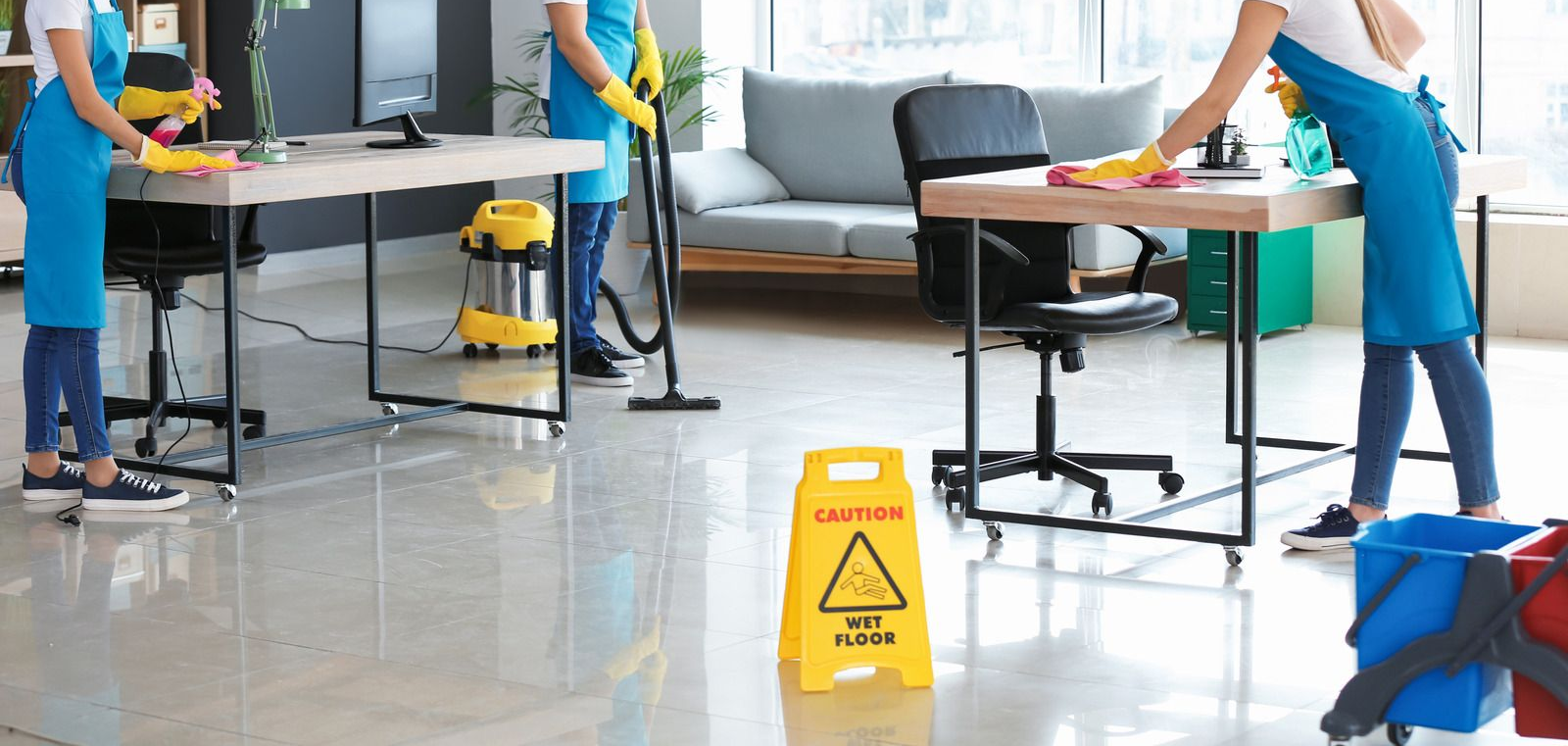
Trash removal, vacuuming, dust mopping, glass and entry door spot cleaning, and wiping desks, counters, and common areas provide the baseline needed to keep workplaces consistently presentable each day.
Restrooms And Break Rooms
Restrooms and break rooms receive focused attention because they generate complaints. Fixtures, floors, dispensers, and touched surfaces are cleaned and sanitized routinely, while essential supplies are restocked before shortages occur.
Floor Care
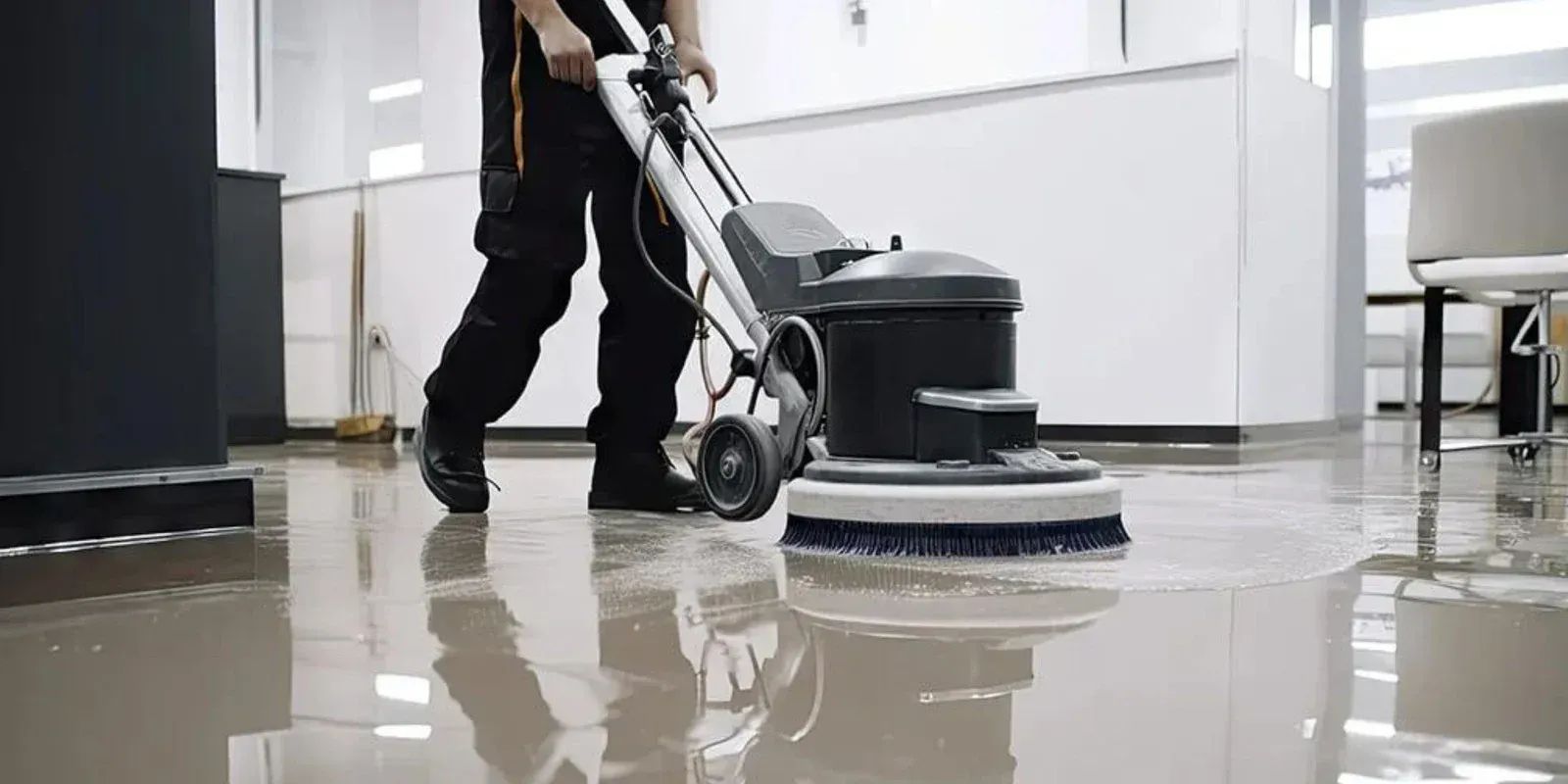
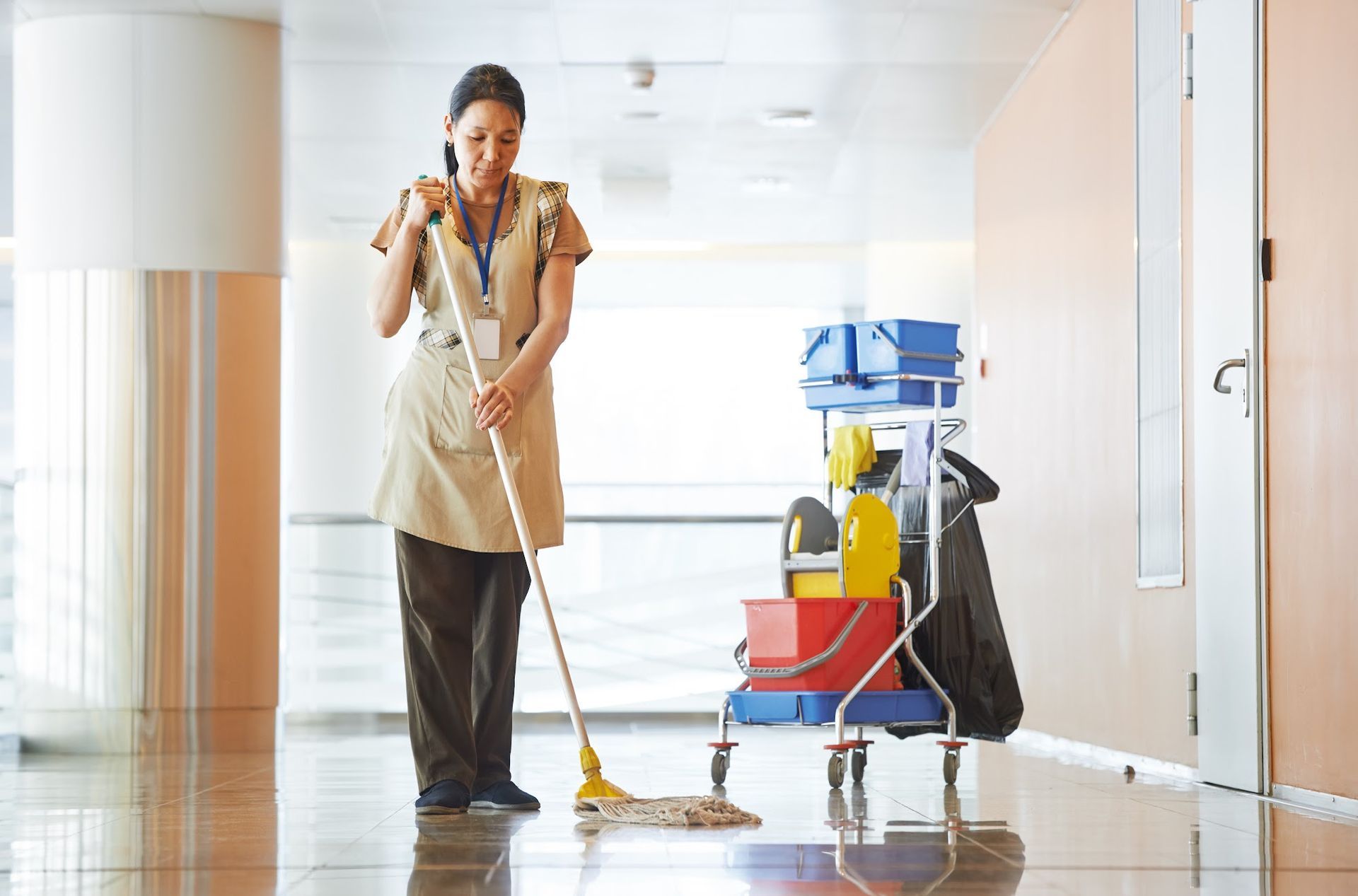
Carpet extraction, hard floor scrubbing, buffing, and finish maintenance address everyday wear. Entry areas and main corridors typically need more frequent attention because they experience heavier traffic than back offices.
Periodic Deep Cleaning
Baseboards, vents, grilles, upholstery, interior windows, and overlooked corners require deeper attention than nightly cleaning allows. These tasks typically follow monthly, quarterly, or seasonal schedules rather than daily cleaning routines.
Turnover And Post Construction Cleaning
After construction, remodeling, or tenant moves, fine dust and debris settle across surfaces. Turnover cleaning removes remaining residue and prepares the space for occupancy under a separate, one-time cleaning scope.
If a proposal lists only a few vague phrases such as "general cleaning" or "office maintenance," ask for the details. A good scope names the areas, the tasks, and how often each one happens.
TIP: Ask any commercial cleaning provider for a copy of their safety data sheets and dilution protocols before they begin work in your facility. A provider who cannot produce these documents on request is not operating at a professional standard. In industrial environments, pressure washing and degreasing operations must account for drainage infrastructure before work begins. Releasing heavy concentrations of petroleum-based soil into storm drains without pre-treatment violates EPA regulations under the Clean Water Act. A qualified commercial cleaning company performs containment and uses vacuums or recovery systems to capture wash water before it enters floor drains in areas that connect to municipal stormwater systems.
Why Evansville Buildings Have Their Own Cleaning Demands
Geography and industry both shape what a cleaning crew walks into. Winters bring road salt and ice melt that get carried across lobbies and onto carpet, where the residue dulls fibers and leaves white film on hard floors. Summers along the Ohio River are humid, which can make restrooms, entry mats, and mechanical rooms hold odors and moisture longer. Spring pollen finds its way through every opened door.
The business mix matters just as much. According to the Evansville Regional Economic Partnership, the area's largest employers include health systems such as Deaconess Health System and Ascension St. Vincent, manufacturers such as Amcor and Mead Johnson Nutrition, distribution operations such as the TJ Maxx facility, two universities, and city government. The Indiana Business Research Center reports that manufacturing accounts for about 17.8 percent of the regional workforce. That is a lot of clinics, production floors, warehouses, classrooms, and public offices, and each one has a different definition of clean.
Many local businesses also operate across state lines. A company based in Evansville might have a second location in Owensboro or Henderson, a warehouse in southern Illinois, or a client site in Louisville. If that sounds like your situation, it is worth asking whether one provider can cover several sites with the same standard, so you are not managing a separate relationship in every town.
TIP: Ask any commercial cleaning provider for a copy of their safety data sheets and dilution protocols before they begin work in your facility. A provider who cannot produce these documents on request is not operating at a professional standard. In industrial environments, pressure washing and degreasing operations must account for drainage infrastructure before work begins. Releasing heavy concentrations of petroleum-based soil into storm drains without pre-treatment violates EPA regulations under the Clean Water Act. A qualified commercial cleaning company performs containment and uses vacuums or recovery systems to capture wash water before it enters floor drains in areas that connect to municipal stormwater systems.
Match the Scope to Your Type of Building
The most common mistake is buying a generic package and hoping it fits. Here is how needs tend to differ by space.
Offices And Professional Suites
Appearance and first impressions matter. Lobbies, conference rooms, restrooms, kitchens, and shared spaces receive focused attention, with most cleaning completed after hours so staff and visitors arrive to fresh surroundings.
Medical And Dental Offices
Cleaning supports infection prevention and requires attention to identified high-touch surfaces, room-specific routines, and proper timing. Clinic crews need training in healthcare cleaning procedures, not simply general janitorial experience.
Warehouses And Distribution Centers
Dust accumulates on racking, inventory, and equipment while floors handle constant forklift traffic. Cleaning often includes high-reach dusting, floor scrubbing, and aisle maintenance scheduled around shifts and dock activity.
Manufacturing And Industrial Sites
Oil, residue, and fine particulate require different products, equipment, and safety practices than office environments. Crews must understand how to clean around operating machinery, production areas, and clearly marked hazard zones.
Schools, Universities, And Government Buildings
Heavy foot traffic, large restrooms, cafeterias, classrooms, and secure areas shape cleaning requirements. Access procedures, security protocols, and background screening can matter just as much as cleaning quality itself.
Retail And Event Spaces
Customer-facing floors, glass, restrooms, and entrances need to look presentable before doors open. Event venues add tight turnaround requirements, making efficient cleaning between bookings especially important for operations.
The takeaway is simple. Describe your building in detail when you request a proposal, and be wary of any provider who quotes a program without walking the space first.
TIP: Ask any commercial cleaning provider for a copy of their safety data sheets and dilution protocols before they begin work in your facility. A provider who cannot produce these documents on request is not operating at a professional standard. In industrial environments, pressure washing and degreasing operations must account for drainage infrastructure before work begins. Releasing heavy concentrations of petroleum-based soil into storm drains without pre-treatment violates EPA regulations under the Clean Water Act. A qualified commercial cleaning company performs containment and uses vacuums or recovery systems to capture wash water before it enters floor drains in areas that connect to municipal stormwater systems.
Scheduling Around How Your Business Really Runs
A cleaning schedule is not only a matter of convenience. It decides who sees the work, what gets disturbed, and how quickly a problem gets fixed.
After hours cleaning is the most common arrangement for offices because it avoids noise and foot traffic. Daytime cleaning works well for restrooms, lobbies, and high traffic areas that need attention while the building is open. Many buildings use a mix, with a nightly crew for the main scope and a lighter daytime presence for the spaces that cannot wait until evening.
Plants and warehouses often run on shift patterns instead of a clean nine to five. If your operation runs early mornings, weekends, or around the clock, say so. The right provider builds the schedule around your production, not the other way around.
Whatever the pattern, ask how the crew handles access. Who holds keys or codes, how alarms are managed, and how the crew signs in and out are details that protect your building and your staff.
Tip: Ask any provider you are considering to walk your space with you before sending a proposal, and to put the scope in writing by area and frequency. A walkthrough shows how closely they pay attention, and a written scope gives you something specific to check against later.
TIP: Ask any commercial cleaning provider for a copy of their safety data sheets and dilution protocols before they begin work in your facility. A provider who cannot produce these documents on request is not operating at a professional standard. In industrial environments, pressure washing and degreasing operations must account for drainage infrastructure before work begins. Releasing heavy concentrations of petroleum-based soil into storm drains without pre-treatment violates EPA regulations under the Clean Water Act. A qualified commercial cleaning company performs containment and uses vacuums or recovery systems to capture wash water before it enters floor drains in areas that connect to municipal stormwater systems.
High Touch Surfaces, Air Quality, and the Health of Your Building
Cleaning is often described as appearance, but a great deal of it is about health. The CDC advises cleaning high touch surfaces regularly and lists examples that include door handles, stair rails, elevator buttons, restroom fixtures, and desks. These are the surfaces that many different people contact every day, so they spread germs faster than a wall or a windowsill ever will.
Air quality connects to cleaning as well. The EPA's guide for office building occupants ties indoor air quality to the HVAC system, the design of the building, and the everyday sources of pollutants inside it. Dust, carpet residue, and moisture all add to what employees breathe. A cleaning program that controls dust at the source, keeps vents and grilles free of buildup, and dries wet areas promptly supports a healthier building, even though it is only one part of the picture.
Floors bring safety into the conversation too. OSHA safety guidance for walking and working surfaces starts with keeping passageways clean and orderly, and its housekeeping material for hospitals points out that slips, trips, and falls can happen on wet floors during the cleaning process itself. A capable crew uses wet floor signage, works in sections, and finishes the entry areas before the first shift arrives.
TIP: Ask any commercial cleaning provider for a copy of their safety data sheets and dilution protocols before they begin work in your facility. A provider who cannot produce these documents on request is not operating at a professional standard. In industrial environments, pressure washing and degreasing operations must account for drainage infrastructure before work begins. Releasing heavy concentrations of petroleum-based soil into storm drains without pre-treatment violates EPA regulations under the Clean Water Act. A qualified commercial cleaning company performs containment and uses vacuums or recovery systems to capture wash water before it enters floor drains in areas that connect to municipal stormwater systems.
How to Vet a Commercial Cleaning Provider
Price and promises are easy to compare. The qualities that actually protect your building take a little more digging. These questions separate an organized operation from a crew that will need constant managing.
How is the crew screened and trained? People will be in your building alone, often near files, equipment, and personal belongings. Ask about background checks, training on your type of space, and how long employees usually stay.
Who supervises the work? Find out whether a supervisor inspects the finished job, how often, and what happens with what they find. Inspection is what keeps a standard from fading after the first month.
What does the checklist look like? A provider working from a written checklist for your building is far more reliable than one relying on memory.
How do you reach a real person? You should know exactly who to call or email when something is missed, and how fast to expect a reply.
What happens when a task gets missed? Every provider misses something eventually. What matters is whether the fix is quick, direct, and documented.
Can you speak with a current client in a similar building? A reference from a facility like yours tells you more than a brochure.
Experience matters too, and length of time in the local market is one signal among several. A company that has served Evansville businesses for decades has seen the seasonal problems, the building quirks, and the staffing surprises that new operators are still learning about.
Warning:
Do not sign on with a provider that will not put its scope in writing or cannot explain how it responds to a missed task. Vague promises made during a sales call are easy to make and hard to enforce once the crew is working in your building.
TIP: Ask any commercial cleaning provider for a copy of their safety data sheets and dilution protocols before they begin work in your facility. A provider who cannot produce these documents on request is not operating at a professional standard. In industrial environments, pressure washing and degreasing operations must account for drainage infrastructure before work begins. Releasing heavy concentrations of petroleum-based soil into storm drains without pre-treatment violates EPA regulations under the Clean Water Act. A qualified commercial cleaning company performs containment and uses vacuums or recovery systems to capture wash water before it enters floor drains in areas that connect to municipal stormwater systems.
Setting Up the First Thirty Days
The first month sets the tone for the whole relationship, and a little structure at the start prevents most problems later.
Walk The Building Together
Point out sensitive areas, fragile surfaces, and rooms requiring special handling, including server closets or laboratories. This walkthrough helps cleaners understand site-specific concerns before regular service begins.
Agree On The Scope By Area
Every space, task, and cleaning frequency should be clearly outlined. Both sides then understand what is included, what completion means, and which responsibilities belong to each party.
Settle Access And Communication
Decide who holds keys or access codes, who receives cleaning reports, and how problems should be communicated. Clear procedures prevent confusion and help issues get addressed promptly.
Check The Work Early And Often
Walk the building after the first few visits and note what looks right and what needs adjustment. Early feedback is easier to address than complaints accumulated until quarterly reviews.
Adjust As You Learn
Some areas may need more frequent attention than expected, while others may require less. A good provider should be prepared to fine-tune the scope as actual needs become clear.
TIP: Ask any commercial cleaning provider for a copy of their safety data sheets and dilution protocols before they begin work in your facility. A provider who cannot produce these documents on request is not operating at a professional standard. In industrial environments, pressure washing and degreasing operations must account for drainage infrastructure before work begins. Releasing heavy concentrations of petroleum-based soil into storm drains without pre-treatment violates EPA regulations under the Clean Water Act. A qualified commercial cleaning company performs containment and uses vacuums or recovery systems to capture wash water before it enters floor drains in areas that connect to municipal stormwater systems.
Frequently Asked Questions
How often should a commercial space be cleaned?
It depends on foot traffic and the type of building. Many offices are cleaned several nights a week, while medical offices, schools, and busy public spaces often need daily service. Restrooms and high touch areas usually need attention more often than private offices.
What is the difference between janitorial service and deep cleaning?
Janitorial service is the recurring routine that keeps a space in good condition day to day. Deep cleaning is periodic work on things a routine visit does not reach, such as vents, baseboards, upholstery, and detailed floor restoration.
Can cleaning happen while employees are in the building?
Yes, for certain tasks. Restrooms, lobbies, and high traffic areas are often cleaned during business hours, while noisy or disruptive work such as floor scrubbing and carpet extraction is usually saved for after hours.
Do I need one company for several locations?
It is not required, but using one provider across sites makes it easier to keep the same standard, the same checklists, and one point of contact. That matters most for businesses with locations across Indiana, Kentucky, and Illinois.
How do I know the crew is actually doing the work?
Written checklists, supervisor inspections, and your own walkthroughs are the three best checks. Ask a provider how it documents completed tasks and how it responds when you find a problem.
What should I have ready before the first visit?
Have a list of areas that need special handling, your preferred cleaning hours, access details for the crew, and the name of the person who will be the main contact on your side.
TIP: Ask any commercial cleaning provider for a copy of their safety data sheets and dilution protocols before they begin work in your facility. A provider who cannot produce these documents on request is not operating at a professional standard. In industrial environments, pressure washing and degreasing operations must account for drainage infrastructure before work begins. Releasing heavy concentrations of petroleum-based soil into storm drains without pre-treatment violates EPA regulations under the Clean Water Act. A qualified commercial cleaning company performs containment and uses vacuums or recovery systems to capture wash water before it enters floor drains in areas that connect to municipal stormwater systems.
A Cleaner Building Starts With the Right Partner
Choosing a commercial cleaning provider comes down to fit and follow through. The right partner understands the type of building you run, writes down what will be done and how often, staffs the work with people you can trust in an empty building, and answers quickly when something needs attention. Businesses that spend an hour asking those questions at the start usually spend far less time chasing problems later, and more time focusing on the work that keeps their doors open.
In Evansville, IN, Integrity Facility Solutions
has spent 35
years caring for offices, medical facilities, schools, warehouses, and plants, learning how salty winters, humid summers, and shift schedules shape what a building needs. That local knowledge shows up in the details, from entry mats that stay clean through January to restrooms that are ready before the first shift arrives. When the scope fits the space and the crew knows the building, a clean workplace becomes part of how the day begins.